
The Importance of Reading and Stories in Vocabulary Building

Once upon a time in the village of Varanasi, lived a boy named Arjun. While other children played outside in the evenings, Arjun was always curled up with a book. His love for stories began with his grandmother’s bedtime tales filled with adventure and magical words. Unknowingly, these stories were shaping his vocabulary and view of the world.
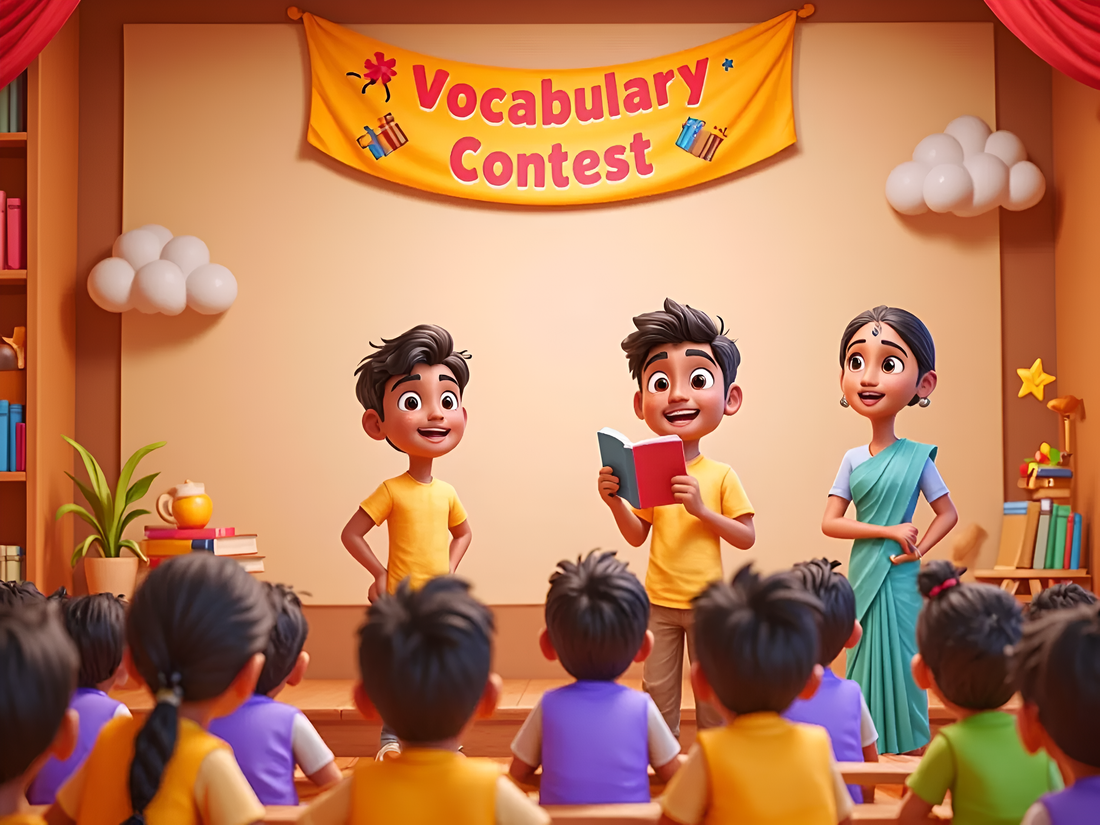
One day, Arjun’s teacher, Ms. Radha, announced a vocabulary contest. Excited but nervous, Arjun wondered if his love for books would help. His best friend Ravi, who struggled with remembering words, sighed, “I wish I could remember words like you. How do you do it?”
“Maybe it’s because I read stories every day,” Arjun said. “They make words come alive.”
Stories: A Natural Way to Learn Words
Stories introduce new words in context, making it easier to understand and remember them. Instead of memorizing word lists, Arjun encountered vocabulary in exciting situations. Reading a mystery novel taught him words like detective, clue, and evidence. Fantasy books brought realm, sorcerer, and enchanted. These words stuck because they were tied to adventure.
Reading Boosts Language and Imagination
Arjun’s favorite book, The Lost Kingdom, was about a warrior on a magical quest. While reading, he found words like vanquish, fortress, and treacherous. He guessed their meanings from the context and later confirmed them in a dictionary.
Ms. Radha encouraged the class to read aloud to improve pronunciation and word memory. Arjun practiced this and noticed he could express himself better in speech and writing. His sentences became more detailed, and his confidence grew.
Learning Through Stories – Effortlessly
One evening, while studying together, Arjun handed a book to Ravi. “Let’s read a story instead of cramming words.”
Ravi hesitated but agreed. As they read, the difficult words started making sense. “I get ominous now,” Ravi said. “The story said, ‘The sky looked ominous before the storm.’ So it must mean something bad might happen!”
“Exactly!” Arjun smiled. “In stories, you don’t just learn words—you feel them.”
Different Books, Different Words
Reading across genres helps children learn varied vocabulary:
-
Adventure stories teach words like expedition, courageous, perilous.
-
Historical fiction brings terms like monarchy, revolution, chariot.
-
Science fiction introduces robotics, galaxy, teleportation.
-
Poetry and rhymes develop rhythm and sound awareness.
Arjun’s wide reading helped him absorb all these without trying too hard.
Why Reading Wins Over Rote Learning
Ms. Radha often said, “Words are more than definitions. They carry feelings and meaning that changes with context.” Arjun embraced this. Reading became a doorway to expression and creativity.
Contest Day Surprise
On contest day, Arjun performed well. But the big surprise was Ravi reaching the final round too.
“I didn’t just study words—I read them!” Ravi said.
Ms. Radha smiled, “That’s the power of stories—they teach you without pressure.”
Ravi and others began to read more. Arjun kept discovering new worlds through books. Reading became more than a hobby—it became their superpower.
Stories help children build vocabulary, imagination, and confidence—just like Arjun and Ravi.